
自动导览

结束导览

导览列表

展览信息

全景导览

迷你模型

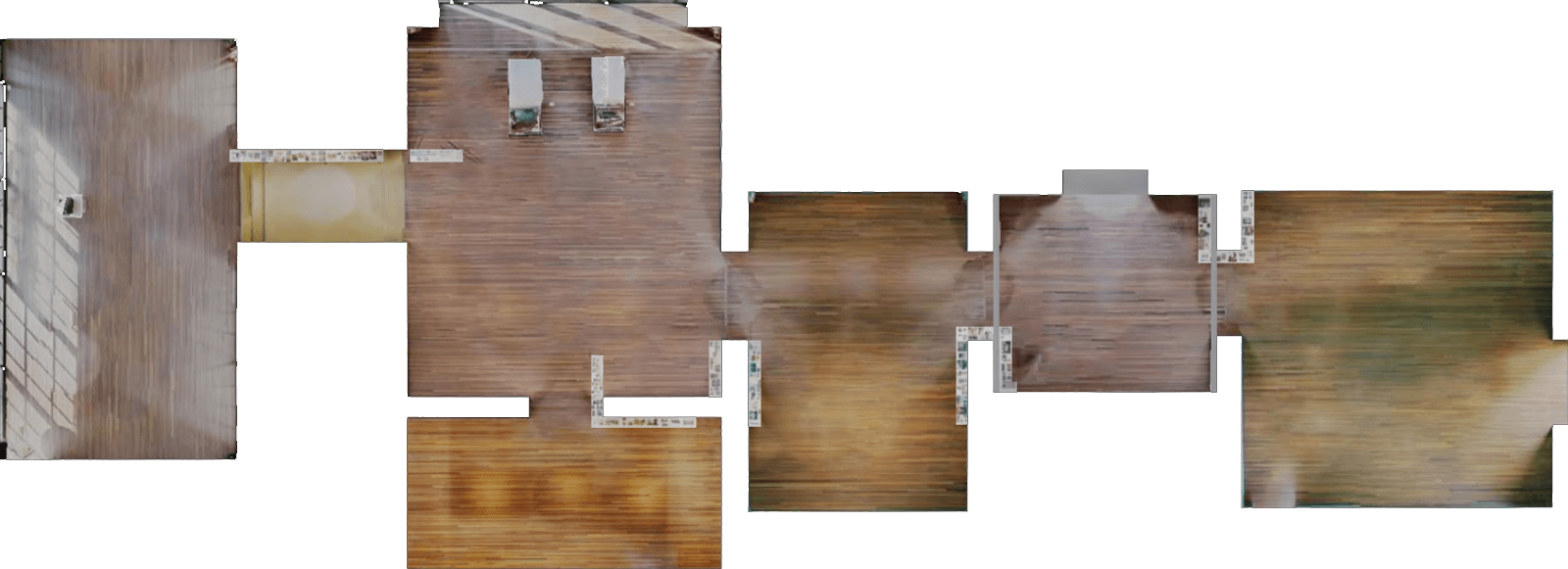
顶部视图
-
全景导览

作品列表

楼层选择

开启音乐

关闭音乐

技术支持
POSE美-李青个展
Pose of Beauty
As compared to Li Qing's other exhibitions, this project stands out. The purpose is not merely to showcase the visual significance of Li Qing's works but to thoroughly analyze the reality, concepts, and methods that underlie these creations.
The motivation for this project stems from Li Qing's previous works: the early "Find the Differences" series, where two similar images transform "seeing" into "recognition"; the "Mutual Destruction" series, where two figures overlap, yielding an ambiguous result that points to the mystery of painting reconstructing reality and contemplates the philosophical aspects of reality and virtuality; the "Window" series explores internal and external perspectives leading us into the narrative dimension, exploring time and space in relation to observation. This narrative continues until the emergence of the "Architecture" series, where Li Qing's thematic focus revisits the ongoing reality, prompting a reconsideration of constructed life and radical aesthetics.
To expound on these matters with greater clarity, the exhibition adopts a "typological" approach, categorizing works into several units such as "Frame Paintings," "Windows," "Urban Life," "Hangzhou Houses," and the newly created “Pine" series. The connections between exhibition halls are facilitated by display panels that link various spaces. The aim is to bring these issues together for focused discussion. Within the same theme, artworks are no longer isolated stories but rather transformed into conceptual "characters" and "words." The exhibition's viewpoint, far from being results-oriented, is essentially a retrospective exploration of results, allowing the elements, concepts, and ideas within the works to return to the social context from which they originated.
In response to these questions, we have first added the artist's creative materials to explain the origins of the images within the works: What captivated the artist? What grounds the work? Which historical resources and techniques has the artist borrowed, and what influences from art history are at play? Simultaneously, through these subtle traces, we gain insight into the artist's life, emotions, and source of inspiration. Furthermore, some extended materials redirect our gaze to a broader world, unveiling the real environment in which the artist's thoughts take shape, the divergent branches of concepts, and the soil brought forth from the historical roots.
The presentation of text and archives reveals the thought processes and real-world references behind Li Qing's works, categorized into various themes concerning the "Pose of Beauty": exaggerated and stylized landmark structures in contemporary urban landscapes; acrobatic postures seen in popular imagery and flamboyant character depictions; alluring camping scenes influenced by the internet, crafting an idealized "good life" for the petite bourgeoisie; verdant landscapes with pine trees as central motifs in diverse locales; museum check-in photos that become social media sensations, and sculptures in urban settings mimicking a European lifestyle. These poses function as "beauty" advertisements, presuming that by acquiring them, one attains a life of aesthetic splendor.
The definition of "beauty" is merely an outcome but Li Qing traces it back to the historical context of the early 20th-century modern art movements such as Cubism, Futurism, and Fauvism, which influenced people's understanding of form, fantasy, and aesthetic sensibilities. These movements diverged from Bauhaus, shifting design from "utility" to "form" and from "function" to "aesthetics." Later, Constantin Brâncuși and Henry Moore provided further inspiration for the formalist movement. It wasn't until advancements in science and technology that these "inspirations" could be realized. However, the materials achieving curved beauty created a shell of aesthetics—smooth, reflective, craving for likes, with a strong plastic quality and a sense of empty futurism, interrupting the greatest tradition of humanism: the traces of self-redemption and social redemption.
Yet, how does art achieve these reflections? From the perspective of a painter, Li Qing always manages to discover similarities in appearances, forms, and shapes among different things. However, beyond the role of a painter, Li Qing adopts an intellectual perspective, a position to view things: not discovering beauty within things but contemplating, judging, and reflecting on "beauty." In this way, Li Qing continues the tradition of caricature in art history, echoing the sharpness of Honoré Daumier, the iconic "Luncheon on the Grass" by Édouard Manet, and the postmodern humor of John Currin.
In other words, Li Qing, through the magical rhetoric of painting, reaffirms the function of art in reflecting on reality, extending the meaning of realism. He further develops a new grammar, blending "subjects" into "questions" through the association, contrast, juxtaposition, and intertextuality of visual texts. However, the objects are not fleeting glimpses of modern life but rather a surface aesthetic and superficial existence widely embraced in postmodern life due to a lack of spiritual depth
Curator: Cui Cancan
POSE 美
和李青其它的展览相比,这是一个特别项目。它的意图并非是呈现李青作品视觉上的意义,而是对形成作品的现实、观念和方法的剖析。
项目的动机,来自于李青过去作品的引导:早期“找茬”系列中,两张相似的画面,让“看”变成了“识别”;“互毁”系列中,两个形象彼此叠合,产生了一个含混的结果,指向绘画重建现实的奥秘,真实与虚拟的哲思;“窗”系列中,内外的观看,又将我们引向叙事的维度,关于观看的时间与空间。直到,“建筑”系列的出现,李青的议题又重返此刻正在发生的现实,重思被虚构的生活和激进的美学。
为了更清晰的说明这些问题,展览以“类型学”的方式进行分门别类,分成“框形画”、“窗户”、“都市生活”、“杭州房子”和新创作的“松”几个单元。展厅和展厅之间的联系,由连接各个空间的展板完成。它试图将问题组织在一起,进行集中讨论。在同一主题中,作品不再是孤立的故事,而是化作观念的“字”与“词”。展览的视角,也并非由结果出发,而是关于结果的倒叙,让作品中的元素、概念、想法回到衍生它的社会现场。
作为问题的解答,我们首先增添了艺术家创作的素材,以交待作品中形象的来源:是什么吸引了艺术家?它有着什么样的依据?艺术家又借用了哪些历史资源和手法、受哪些艺术史的影响?同样,我们也借着这些蛛丝马迹,得以窥视艺术家的生活、情感和灵感的来源。一些延展性的资料,又将我们的目光,引向更宽广的世界,艺术家思想形成的现实环境,观念的旁枝侧叶,历史根茎中带出的泥土。
文本与档案的展示方式,揭示了李青作品背后的思考轨迹和现实指向,它们被分成几类关于“美的POSE”:现代都市中夸张而又景观化的地标式建筑;流行图像中杂技式的姿态,浮夸的人物造型;互联网诱惑并塑造小资“美好生活”的露营场景;不同地区以松树为主题的绿化景观;社交媒体上美术馆打卡的网红照片,以及假装生活在欧洲的城市雕塑。这些POSE像是“美”的广告,假定你拥有了它,便拥有了美好的生活。
“美”的定义只是结果,李青将它拉回历史的脉络中,20世纪初的现代艺术运动,立体派、未来派、野兽派影响了人们对于形式、狂想和美感的认识。它分化了包豪斯主义,设计从“ 实用”转向“形式”,由“功能”转向“美感”。之后,布朗库西和亨利摩尔,又为形式主义运动提供了进一步的灵感。直到科学和技术的进步,这些“灵感”得以实现。然而,达成曲线美的材料,造就了这种美感的外壳,它平滑、反光,渴望点赞,有着浓浓的塑料气质和虚无的未来感,它中断了人文主义最伟大的传统:自我救赎和社会救赎的踪影。
可是,艺术如何达成这些反思?带着画家的目光,李青总是能发现不同事物间,相似的外表、形式与造型。画家身份之外,李青又有着知识分子的立场,看待事物的立场:不是在事物中发现美感,而是思考、评判、反思“美感”。于是,我们看到李青延续了艺术史中讽刺画的传统,杜米埃的尖刻,马奈描绘的中产在草地上的午餐,约翰.柯林后现代式的幽默。
或者说,李青通过绘画修辞的魔术,重申了艺术反思现实的功能,延展了现实主义的含义。他进而发展出一种新的语法,通过视觉文本的关联、对比、并置和互文,将“对象”杂糅成“问题”。只是,对象不是现代生活中的浮光掠影,而是后现代生活中,由于精神的匮乏,人们普遍信奉的一种表面的美感、浅薄的生活。
策展人:崔灿灿